
 |
|
Posted: 02 Sep 2015 07:58 AM PDT
Μεγάλη σημασία έδιναν οι αγωνιστές στον οπλισμό τους-------Μεγάλη σημασία έδιναν οι αγωνιστές στον οπλισμό τους.-------- Επρόκειτο για όπλα πρωτόγονα που απαιτούσαν σωματική ρώμη και γρήγορα αντανακλαστικά από τους χειριστές τους. Οι ονομασίες που τους έδιναν, όπως Nταλιάνι, Λαζαρίνα, Σισανές, μαρτυρούν την ιδιαίτερη σχέση που είχαν για τους κατόχους τους.
Τον
δεσμό αυτό αλλά και την οικονομική κατάσταση του κατόχου φανερώνει ο
τρόπος με τον οποίο διακοσμείται ο οπλισμός. Χάλυβας, χαλκός, χρυσός
και φίλντισι, ασήμι, πολύτιμες πέτρες, δέρμα, ακόμη και μαργαριτάρια και
κοράλλια ήταν τα διακοσμητικά υλικά σε λαβές τουφεκιών, γιαταγανιών και
σπαθιών.
Εργαστήρια για την κατασκευή των όπλων υπήρχαν σε διάφορες περιοχές της Ελλάδας, ιδιαίτερα όμως στην Ήπειρο και τα Άγραφα. Επίσης, στη Δημητσάνα, την Aρκαδία και το Mαυρίλο στη Φθιώτιδα κατασκευάζονταν
πυρομαχικά. Αργότερα οι φιλέλληνες και ο οργανωμένος τακτικός στρατός
προμήθευσαν τους αγωνιστές με σύγχρονα ευρωπαϊκά όπλα, Γαλλικής,
Βελγικής, Ιταλικής και Ρωσικής προέλευσης.
Oι
μνήμες της επανάστασης είναι πλέον αντικείμενα συλλογών και μουσειακά
εκθέματα, ηρώα, αφίσες στους σχολικούς χώρους, λιθογραφίες,
γραμματόσημα, ποιήματα και πεζογραφήματα. Έτσι τις γνωρίζουμε οι
περισσότεροι. Είναι αυτονόητο ότι τα όπλα που διασώθηκαν έως σήμερα ήταν
τα πολυτιμότερα, τα ανθεκτικότερα και μάλλον τα λιγότερο
χρησιμοποιημένα στη μάχη.
Χαρμπί
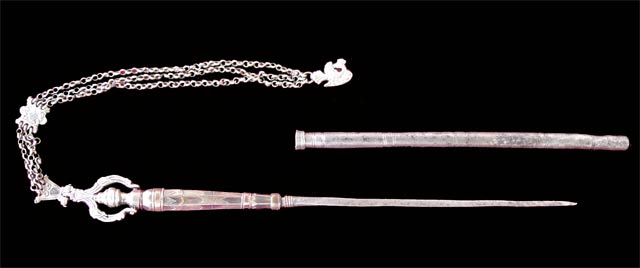
Χρησιμοποιείται για το γέμισμα του όπλου , αλλά και ως λίμα για το τρόχισμα των σπαθιών.
Πιστόλα ή Μπιστόλα (ρόκες)
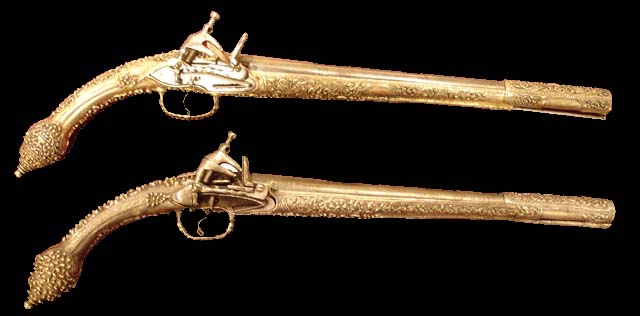
Κοντόκανο
όπλο που χρησιμοποιήθηκε κατά την Επανάσταση από τους αγωνιστές του
1821. Ήταν μονόκανες και δίκανες. Τις δίκανες τις έλεγαν διμούτσουνες.
Στην φωτογραφία είναι ασημένιες επίχρυσες πιστόλες (ρόκες) Τέλη 18ου
αιώνα. Μήκος 58 εκ. Εξαιρετικό δείγμα Ηπειρώτικης αργυροχρυσοχοϊας στα
όπλα. Είναι στολισμένες με αχιβάδες , κανόνια , πελέκεις , ακόντια ,
λάβαρα και φυτά. Οι μηχανισμοί πυροδότησης είναι ευρωπαϊκοί.
Τρομπόνι – τρομπόνια
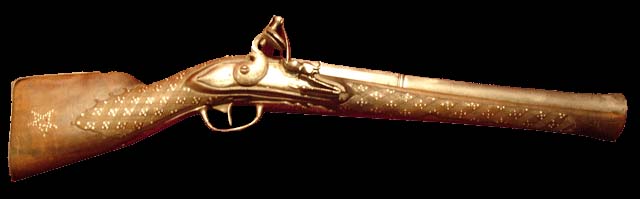
Σε αντίθεση με τους στεριανούς οι Ελληνες Ναυτικοί δεν κρατούσαν τα καριοφίλια αλλά τα λεγόμενα Τρομπόνια .
Βραχύκαννα δηλαδή όπλα τα οποία έβαλλαν ταυτόχρονα πολλά μικρά σφαιρίδια μαζί . Όπλο με πλατιά κάνη με μηχανισμό πυριτόλιθου, διακοσμημένο με σταυροειδή ασημένια καρφάκια 1750-1800.
Καρυοφύλλι – καριοφίλι
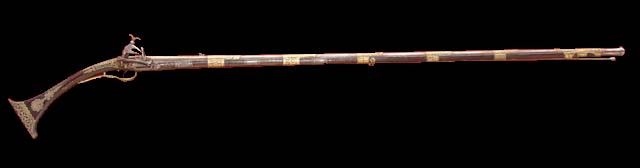
Παλιό
εμπροσθογεμές τουφέκι με μακριά κάννη, που είχε για την πυροδότησή του
πυριτόλιθο. Το καριοφίλι διαθέτει μεγάλο κοντάκιο με κοίλο περίγραμμα
στην πάνω και πλαϊνή πλευρά και ελαφρά κυρτό στην κάτω. Η κάνη είναι
επιμήκης, σχεδόν κυλινδρική, σιδερένια με στόχαστρο. Κάτω από την κάνη
αναπτύσσεται ο ξύλινος ξυστός, που στο εσωτερικό του δέχεται το
σιδερένιο οβελό γεμίσματος του όπλου.
Σχεδόν
όλο το ξύλινο κοντάκιο καθώς και ο ξυστός καλύπτονται με ελάσματα
μπρούντζου που φέρουν εγχάρακτη διακόσμηση με φυτικά κυρίως μοτίβα και
ενώνονται με μικρά καρφάκια, φανερώνοντας τάση για καλλιτεχνική
διακόσμηση του όπλου. Πλατύ έλασμα περιβάλλει τη σκανδάλη, ενώ σώζεται
καλά το σύστημα πυροδότησης του μπαρουτιού. Στη χειρολαβή υπάρχει
κρίκος, προφανώς για το λουρί του όπλου. Την ονομασία του την οφείλει
στο Βενετικό εργοστάσιο κατασκευής όπλων, «CΑRLΟ E. FIGLI» (Κάρλο και
υιοί) το οποίο και κατασκεύασε το πρώτο καριοφίλι.
Το καριοφίλι ήταν το κλασικό όπλο της ελληνικής επανάστασης του 1821.
Με αυτό δοξάστηκε η κλεφτουριά. Έγινε ο αχώριστος σύντροφος κάθε
κλέφτη, κάθε αρματολού. Από τον ήχο του αντηχούσαν οι απόκρημνες
ελληνικές βουνοκορφές.
Οι
πόλεις που το κατασκεύαζαν ήταν η Δημητσάνα και η Νάουσα. Η δημοτική
μούσα ύμνησε το καριοφίλι όσο κανένα άλλο όπλο, το οποίο μεταχειρίστηκαν
οι Έλληνες στους τίμιους αγώνες τους. Γνωστοί οι στίχοι που φανερώνουν
την επιθυμία αλλά και τη δύναμη του λαϊκού αγωνιστή: «Θα πάρω το τουφέκι μου, τ’ άγιο το καριοφίλι».
Παλάσκες
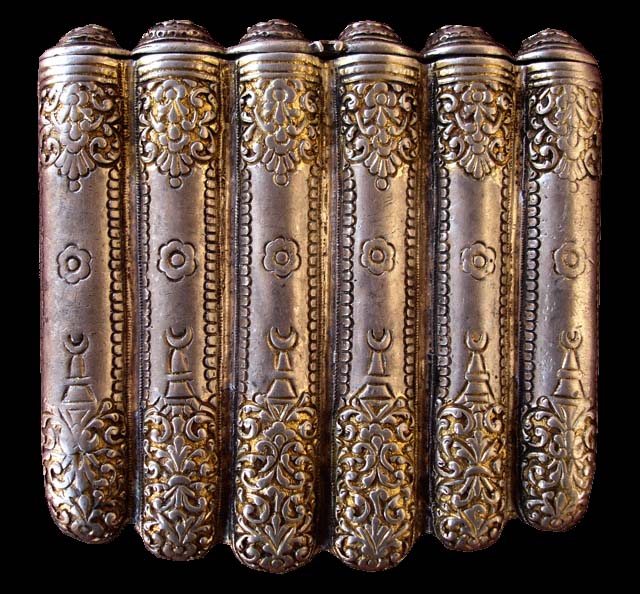
Ασημένια
περίτεχνη ηπειρώτικη παλάσκα με φυτικά θέματα, διακοσμημένη με την
τεχνική Σαβάτ. Αρχές 19ου αιώνα. Οι αγωνιστές του 1821 φορούσαν γύρω από
την μέση τους τις Παλάσκες στις οποίες τοποθετούσαν τα πολεμοφόδια
τους. Μία μικρή μεταλλική ορθογωνική θήκη για τις τσακμακόπετρες των
πυροβόλων όπλων τους και το «μεδουλάρι» .
Σελάχι
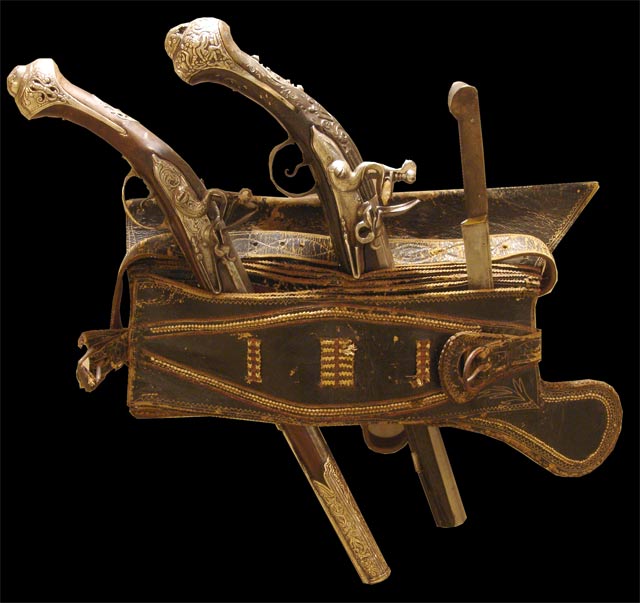
Δερμάτινο
σελάχι με πιστόλες και μαχαιρακι. Το σελάχι ήταν ανδρική ζώνη-θήκη που
φοριόταν με τις φορεσιές με φουστανέλα. Χρησιμοποιήθηκε αρχικά από τους
οπλαρχηγούς της Επανάστασης και αργότερα από ορισμένους αστούς στην
Πελοπόννησο, Στερεά Ελλάδα και Ήπειρο.
Μεδουλάρι
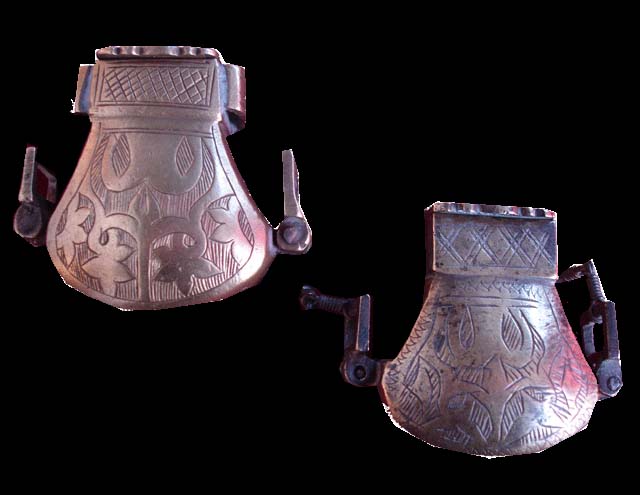
Ασημένιο
μεδουλάρι (δοχείο λίπους) 19ος αιώνας. Το Μεδουλάρι είναι μεταλλική
θήκη όπου φυλαγόταν το μεδούλι (λίπος) για την λίπανση των όπλων.
Κρεμόταν από τη μέση, στερεωμένο στο σελάχι ή το ζωνάρι, συνήθως στην
αριστερή πλευρά.
Σπάθη – Σπάθα
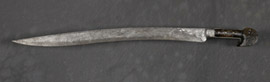
Χαρακτηριστική
… είναι η «Aσήμω» (με το μαύρο φόντο) , η σπάθα του Oδυσσέα Aνδρούτσου
(1788/89-1825), ο οποίος μετά το θρυλικό κατόρθωμα της Γραβιάς
ανακηρύχθηκε αρχιστράτηγος της Aνατολικής Στερεάς, για να κατηγορηθεί
στη συνέχεια από τους αντιπάλους του και να δολοφονηθεί στην Aκρόπολη
της Aθήνας τον Iούνιο του 1825. Ενα απαραίτητο συμπλήρωμα του οπλισμού
των αγωνιστών του 1821 ήταν η κυρτή ανατολικού τύπου ΣΠΑΘΗ , την οποία
αναρτούσαν με μεταξωτά κυλινδρικά κορδόνια από τον ώμο τους ή σπανιότερα
την αναρτούσαν με δύο λεπτά λουριά σε μία επίσης λεπτή δερμάτινη ζώνη
την οποία φορούσαν στην μέση τους .
Επίσης : Οι σπάθες αποτελούσαν μέρος του οπλισμού των στρατιωτών μέχρι και τον πρώτο παγκόσμιο πόλεμο. Εντυπωσιάζει το σπαθί από την εποχή της Τουρκοκρατίας, με επιμήκη λάμα, κυρτή στη ράχη της ενώ στην κόψη είναι κοίλη και προς την αιχμή γίνεται κυρτή. Η λαβή αποτελείται από δυο τμήματα ξύλου που στο κάτω άκρο τους αποκτούν πλατιά, κυρτή επιφάνεια, εσωτερικά και εξωτερικά επίπεδη. Το κενό ανάμεσά τους καλύπτει ταινιωτό έλασμα από ατσάλι που φέρει εγχάρακτη διακόσμηση από κυματιστές γραμμές. Το έλασμα αυτό συνεχίζεται και πάνω από την ξύλινη λαβή, καλύπτοντας ένα τμήμα πριν αρχίσει η λάμα. Στη βάση της λάμας, και στις δυο όψεις, υπάρχει διακοσμητικό εγχάρακτο έλασμα, σχεδόν τριγωνικό, του οποίου η μια πλευρά σχηματίζει καμπύλες πάνω στην ξύλινη λαβή.
Γιαταγάνι (Yatagan)
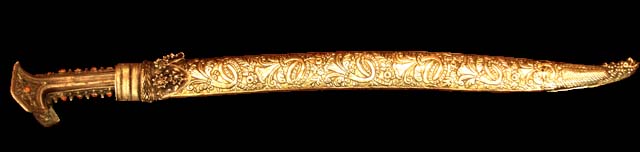
Είναι
ένα είδος μεγάλης μαχαίρας, χωρίς φυλακτήρα στη λαβή , τουρκικής
προέλευσης. Η λεπίδα του γιαταγανιού σχηματίζει κοίλη καμπύλη στο μέσο
και κυρτή στην αιχμή. Πλατιά και καμπυλωτή προς το μέρος της αιχμής
μάχαιρα ή σπάθη που χρησιμοποιήθηκε από τους Άραβες και τους Τούρκους.
Η χρήση του γενικεύτηκε κατά τη διάρκεια της Επανάστασης και αποτέλεσε απαραίτητο εξάρτημα του οπλισμού των Ελλήνων αγωνιστών.
ΠΗΓΕΣ : asxetos.gr και η εφημερίδα Μακεδονία, με φωτογραφίες από το μουσείο Φωτίου Ραπακούση
ΕΛΛΑΣ
|


Driving the Future
Combating Climate Change with Cleaner, Smarter Cars
A distinguished expert offers a dazzling preview of the cars of the future, while exploring the science and politics behind climate change.
In Driving the Future, Margo Oge portrays a future where clean, intelligent vehicles with lighter frames and alternative power trains will produce zero emissions and run at 100+ mpg. With electronic architectures more like that of airplanes, cars will be smarter and safer, will park themselves, and will network with other vehicles on the road to drive themselves. Offering an insider account of the partnership between Federal agencies, states, environmental groups, and car manufacturers that led to the historic deal, she discusses the science of climate change, the politics of addressing it and the lessons learned for policymakers.
Order Book$24.99 hardcover (Can. $31.99)
Arcade Publishing
World (W) • CQ 32
ISBN 978-1-62972-538-4
Nature/Environment
Praise for Driving the Future
“Margo tells the incredible story of how California and then Washington overcame the fierce opposition of the auto companies and finally were able to mandate much more efficient and cleaner cars and light trucks. This is the story of how hard it is to combat climate change — and also how imaginative and determined leaders can get it done.”
—Jerry Brown, Governor of California
“Margo Oge describes the astounding transformation of cars and trucks in America—cutting pollution by more than 97 percent, and greenhouse gases by more than half—and shows the way to complete this job. It is a compelling story and a great read.”
—Hal Harvey, CEO of Energy Innovation
“Driving the Future is a testament to the progress that is possible when committed public servants are allowed to follow the scientific evidence where it leads and to envision and then execute ambitious plans for a better technological and environmental future.”
— Lisa Heinzerling, Justice William J. Brennan, Jr. Professor of Law, Georgetown University Law Center
“Margo Oge provides a riveting insider’s account of the people, science, politics, and technologies behind an improbable victory in the battle against global warming. Based on her understanding of how regulation can drive innovation, she depicts a future in which cleaner, lighter, smarter cars will become tools in the fight against climate change rather than contribute to it. Every citizen should read her book and feel proud of what we can accomplish together.”
—Lisa Jackson, EPA administrator, 2009–2013
—Jerry Brown, Governor of California
“Margo Oge describes the astounding transformation of cars and trucks in America—cutting pollution by more than 97 percent, and greenhouse gases by more than half—and shows the way to complete this job. It is a compelling story and a great read.”
—Hal Harvey, CEO of Energy Innovation
“Driving the Future is a testament to the progress that is possible when committed public servants are allowed to follow the scientific evidence where it leads and to envision and then execute ambitious plans for a better technological and environmental future.”
— Lisa Heinzerling, Justice William J. Brennan, Jr. Professor of Law, Georgetown University Law Center
“Margo Oge provides a riveting insider’s account of the people, science, politics, and technologies behind an improbable victory in the battle against global warming. Based on her understanding of how regulation can drive innovation, she depicts a future in which cleaner, lighter, smarter cars will become tools in the fight against climate change rather than contribute to it. Every citizen should read her book and feel proud of what we can accomplish together.”
—Lisa Jackson, EPA administrator, 2009–2013
“Drawing upon her experience as an architect of game-changing fuel economy standards, Margo Oge gives us a roadmap to a future world of better and cleaner cars, healthier air, reduced geopolitical conflict, and stronger communities. If we get there, it will be because of visionaries such as Oge.”
— Ken Kimmel, president, Union of Concerned Scientists
“Driving the Future is a real-world story about the policy visionaries, business leaders, and dedicated citizens who are spurring the clean energy revolution—and ushering in a new era of prosperity for our nation and the world.”
—Fred Krupp, president, Environmental Defense Fund
“Driving the Future is the story of a dramatic success in a key battle in the fight against global warming—improving the environmental performance of vehicle fleets—with a lucid explanation of how to bridge science and public policy. Reading the book is as pleasant as having a talk with a good friend, and as informative as a full course in public policy.”
—Mario J. Molina, PhD, professor at the University of California, San Diego, and winner of the Nobel Prize in Chemistry
“It’s a great story: an insider’s account of the unprecedented collaboration of politicians, regulators, and industry that created the world’s first standards for low-carbon vehicles and a practical guide to steps that all of us—including consumers—must take to create a global market for vehicles that can take us where we want to go while dodging the worst effects of climate change.”
—Mary Nichols, chairman of the California Air Resources Board
— Ken Kimmel, president, Union of Concerned Scientists
“Driving the Future is a real-world story about the policy visionaries, business leaders, and dedicated citizens who are spurring the clean energy revolution—and ushering in a new era of prosperity for our nation and the world.”
—Fred Krupp, president, Environmental Defense Fund
“Driving the Future is the story of a dramatic success in a key battle in the fight against global warming—improving the environmental performance of vehicle fleets—with a lucid explanation of how to bridge science and public policy. Reading the book is as pleasant as having a talk with a good friend, and as informative as a full course in public policy.”
—Mario J. Molina, PhD, professor at the University of California, San Diego, and winner of the Nobel Prize in Chemistry
“It’s a great story: an insider’s account of the unprecedented collaboration of politicians, regulators, and industry that created the world’s first standards for low-carbon vehicles and a practical guide to steps that all of us—including consumers—must take to create a global market for vehicles that can take us where we want to go while dodging the worst effects of climate change.”
—Mary Nichols, chairman of the California Air Resources Board
“Margo and her team at the EPA helped craft far-reaching GHG and fuel economy standards for the US that are accelerating the adoption of future automotive technologies like plug-in electric vehicles and fuel cell vehicles. Margo has the credibility and the record for convincingly discussing a carbon free future in her book, a vision we share.”
—Ulrich Kranz, BMW, Senior Vice President, i Product Line
“Margo has given us a fascinating insider’s view of regulatory development and a framework for collaborative rulemaking that literally changed the face—and tailpipes—of an industry, and a thoughtful look forward to future opportunities.”
—Tom Linebarger, chairman and CEO of Cummins Inc.
“Five stars to Margo Oge! She may be a veteran regulator, but she also has the vision thing, the broad historical and conceptual perspective that made her one of EPA’s stars in the historic achievement of cleaner cars and in the cause of averting climate change. Not to mention that her writing is fluid, engaging, and makes a complex story hard to put down.”
—William Reilly, EPA administrator under President George H. W. Bush
“This book should be a must-read for anyone who wants to know how the regulatory process actually works. Margo Oge provides a compelling insider’s account about the making of President Obama’s landmark vehicle emission rules. She describes how she and her dedicated team at EPA fought political interference under the Bush Administration, formed a crucial partnership with innovative California regulators, and found key allies within the new Obama team.”
—Congressman Henry Waxman
—Ulrich Kranz, BMW, Senior Vice President, i Product Line
“Margo has given us a fascinating insider’s view of regulatory development and a framework for collaborative rulemaking that literally changed the face—and tailpipes—of an industry, and a thoughtful look forward to future opportunities.”
—Tom Linebarger, chairman and CEO of Cummins Inc.
“Five stars to Margo Oge! She may be a veteran regulator, but she also has the vision thing, the broad historical and conceptual perspective that made her one of EPA’s stars in the historic achievement of cleaner cars and in the cause of averting climate change. Not to mention that her writing is fluid, engaging, and makes a complex story hard to put down.”
—William Reilly, EPA administrator under President George H. W. Bush
“This book should be a must-read for anyone who wants to know how the regulatory process actually works. Margo Oge provides a compelling insider’s account about the making of President Obama’s landmark vehicle emission rules. She describes how she and her dedicated team at EPA fought political interference under the Bush Administration, formed a crucial partnership with innovative California regulators, and found key allies within the new Obama team.”
—Congressman Henry Waxman
About Margo T. Oge

Margo Oge retired as director of the Office of Transportation and Air Quality after thirty-two years with the EPA. While at the EPA, she was a chief architect of the most important improvements of air quality from the transportation sector ever, resulting in the prevention of 40,000 premature deaths and hundreds of thousands of cases of respiratory illness. She received Presidential Awards from Presidents Bill Clinton and George W. Bush and numerous environmental and industry awards. In commending her achievements, President Obama wrote, “Under your tireless leadership, we have realized significant environmental achievements in the transportation sector, from making diesel fuels cleaner to finalizing the most aggressive fuel economy standards for cars and trucks out to model year 2025.”


 -
-


 -
-


 -
-


